Do not chase sleep
Start by lowering pressure. The more you panic about sleep, the more alert your system can become.
For middle of the night waking
Start with a calm, practical guide for adults over 50 whose minds turn on in the middle of the night.
Use simple nighttime steps that help your body feel safe instead of fighting sleep.
Learn what to do when your brain starts planning, worrying, or replaying the day at 3 A.M.
Build a calmer rhythm around light, timing, food, and evening routines without harsh sleep rules.
Sleep timing tools
The SleepWell calculator helps estimate bedtime and wake time options around common sleep cycle timing. It is not medical advice, but it can make sleep planning feel less confusing.
Try the sleep calculator
These are planning estimates, not medical advice. Use them gently to reduce guesswork around bedtime and wake time.
The 3 A.M. reset
Start by lowering pressure. The more you panic about sleep, the more alert your system can become.
Keep lights low, avoid the clock spiral, and use a calm reset instead of reaching for stimulation.
Morning light, consistent wake time, movement, and evening timing can all support better nights.
SleepWell article library
Featured
Understand what your brain and body may be doing during the second half of the night.
Read the articleMorning light, evening dimming, and the signals your brain uses to time sleep.
A practical evening rhythm for food, screens, and wind down timing.
Sleep inertia, sleep cycles, and why waking time can matter.
Sleep questions people are asking
The homepage FAQ should answer the highest value questions quickly, then link people into deeper articles and the free guide.
For many adults, the second half of the night includes lighter sleep and more dreaming sleep, which can make waking easier. Stress, pain, bathroom trips, light, alcohol, caffeine, and sleep disorders can also play a role.
Once you wake, your brain may shift into problem solving. The goal is not to force sleep, but to reduce stimulation and give your nervous system a calm path back down.
Keep lights low, avoid checking the time repeatedly, skip scrolling, and use a quiet reset. If you stay awake for a while, a calm low stimulation activity can be better than lying there frustrated.
Yes, sleep often becomes lighter with age. Adults over 50 may also be affected by hormones, pain, medications, bladder changes, stress, or schedule shifts.
It can for some people, especially if late meals trigger reflux, indigestion, blood sugar swings, or body temperature changes. A simple food cutoff experiment can be helpful.
Consider medical guidance if night waking is frequent, causes daytime exhaustion, or comes with loud snoring, gasping, chest discomfort, frequent urination, severe anxiety, pain, or sudden changes in sleep.
Free guide from SleepWell Calculator
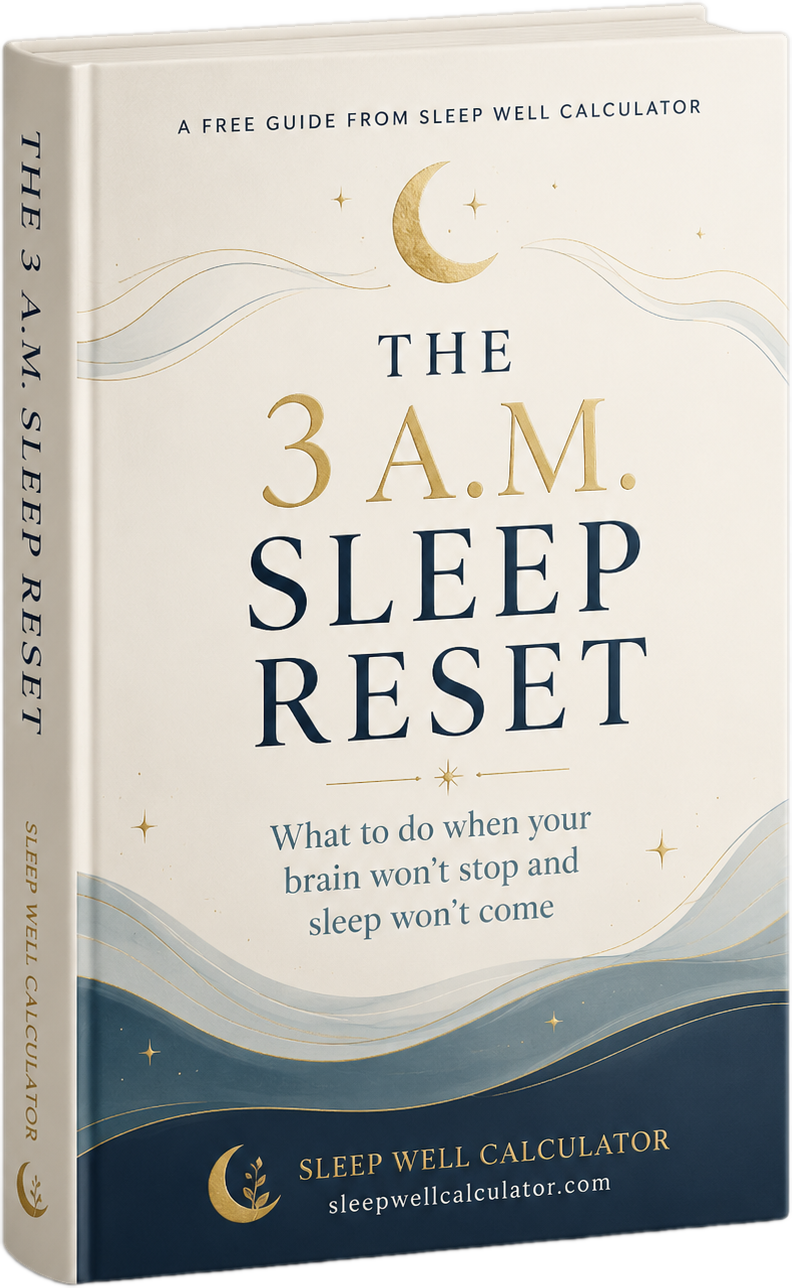
Download the guide and learn what to do when your brain will not stop and sleep will not come.
No spam. Unsubscribe anytime. SleepWell provides education, not medical diagnosis.